Apple Core AI Framework
This Apple documentation introduces the Core AI framework, designed for developers working with artificial intelligence on Apple platforms. It covers features and guides for integrating AI capabilities into applications.
This is a summary of the latest podcast updates, featuring eight new episodes released on June 9, 2026. Many of the programs discuss topics such as artificial intelligence, technology, and education in the AI era.
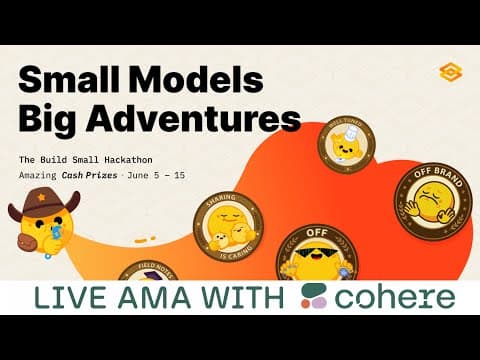
This content announces or discusses the 'Build Small Hackathon' event, featuring a live 'Ask Me Anything' session with Cohere.

This content explains how to integrate Large Language Models (LLMs) with the Vercel AI SDK, specifically using OpenAI for text generation and embeddings. It provides a technical guide on setting up and using the SDK with Node.js, including code examples.
The user is seeking help to set up the Claude Code agent for local development, specifically with llama.cpp and the Qwen3.6-35B-A3B model, as they are encountering difficulties. They are asking for guidance, pointers, or suggestions for alternative tools like pi.dev.
This content introduces agent skills as reusable, task-specific workflows for AI agents, explaining how to install and leverage the open-source oracle-db-skills repository for developing with Oracle AI Database. It provides installation steps for both Codex and Claude Code, encouraging users to write or extend existing skills.
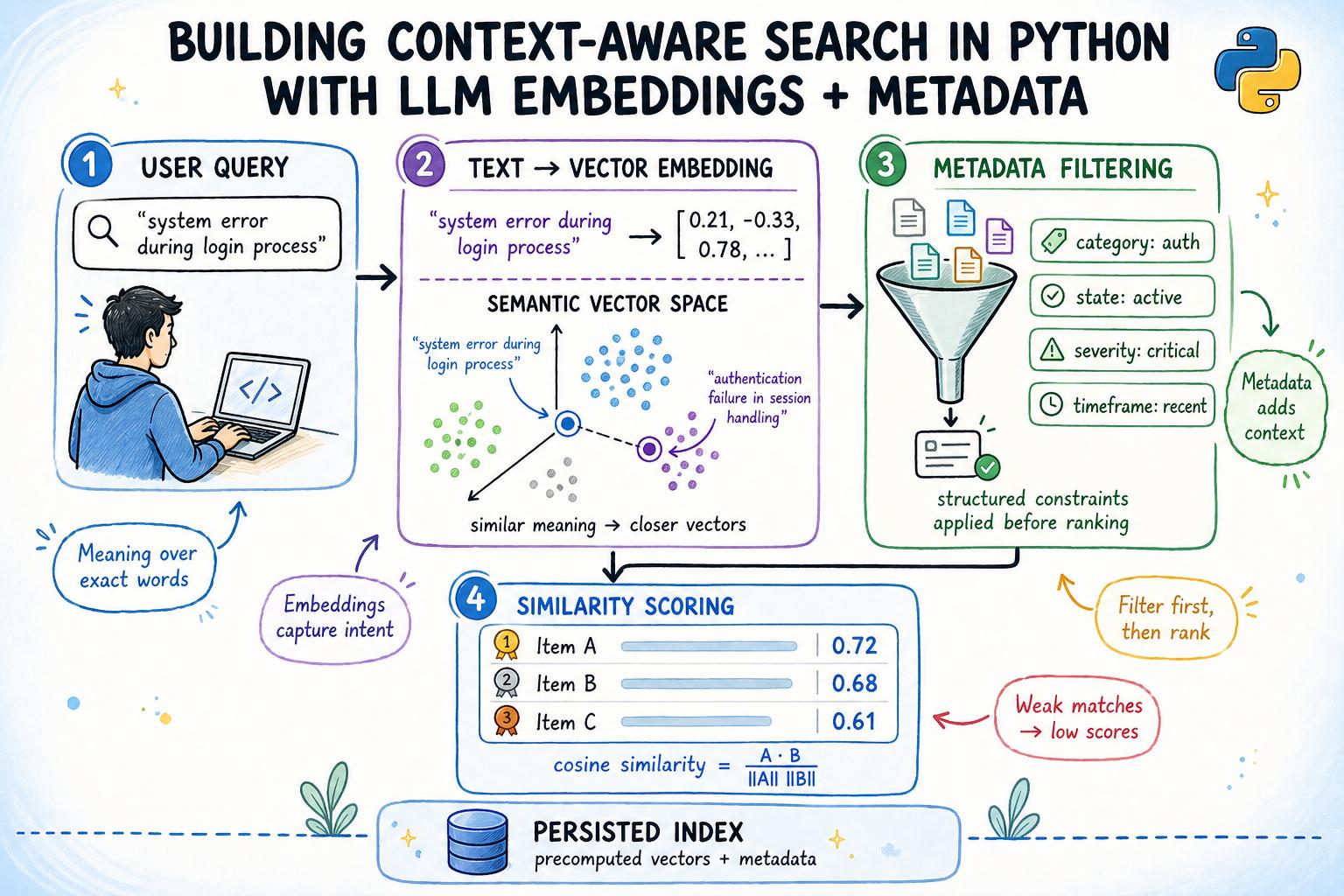
This content focuses on building a context-aware search system in Python, leveraging LLM embeddings and metadata. It explores how to overcome the limitations of keyword search, which often fails if a term is not literally present in the document.

This guide offers a practical, step-by-step approach to configuring Claude Code within NestJS monorepos. It details how to use CLAUDE.md, rules, and skills to align AI-generated code with team conventions and prevent common errors.
The Voice Agent is an interactive grid-based voice assistant interface with multiple state visualizers, part of the Unburn/UI library. It supports five distinct statuses and three visualization algorithms, alongside custom color accents.
This content demonstrates how to add support for multi-model AI, such as DeepSeek, Kimi, and Qwen, to an app using a single OpenAI-compatible API integration. It provides Python code examples for configuring the client and interacting with various models via aibridge-api.com.
AI-built applications often fail at scale because their builders prioritize rapid iteration over robust production readiness. This leads to problems like data residing in third-party infrastructure, causing architectural lock-in, and a lack of proper deployment safety nets.
This article delves into cost-effective alternatives to GPT-4o, revealing how other AI models can offer significant savings for developers. It provides direct cost comparisons, highlighting options like DeepSeek V4 Flash and Qwen3-32B.
This content describes how to develop advanced AI personal assistants capable of automating PC tasks, interacting like chatbots, and browsing the internet. It highlights features such as voice control and advanced AI capabilities, serving as a guide for creating solutions similar to Jarvis.
This article details a method for building AI-tailored document generation systems, particularly for scenarios requiring adherence to design templates and strict data control. It suggests that code should manage the document structure, with Large Language Models (LLMs) used to analyze user input and trigger deterministic tools for fine-tuning.
This guide covers building terminal-based AI agents, a key tool in modern development workflows. It explores various solutions including existing CLI AI agents and optimizing performance by setting up API endpoints for local LLMs like Ollama.
The Strands Agent SDK is an open-source solution designed to simplify the complex process of building intelligent AI agents, abstracting away challenges like orchestration and model integration. It enables developers to create AI agents and multi-agent systems in minutes, not weeks, by reducing boilerplate code.
The article details building a custom tool server for Claude in TypeScript, enabling the AI to use real-world tools via the Model Context Protocol (MCP). This open standard, released by Anthropic, allows compatible AI clients to interact with external services like Wikipedia through a single server.
This content provides a tutorial on connecting an OpenAI SDK application to an API relay, specifically using Vectronode's service. It demonstrates how to modify the base_url and api_key in an existing OpenAI setup to redirect requests to the relay without changing the core chat completion flow.
This comprehensive developer guide explores how to build production-grade AI agents using the Model Context Protocol (MCP). It covers core architecture, the FastMCP Python SDK, advanced patterns, security best practices, and remote server deployment strategies.
This practical guide teaches developers how to build and optimize terminal-based AI agents, leveraging local LLMs for real-time code support. It details the setup of platforms like Aider and Ollama, and includes an example CLI agent with function calling capabilities.