CASEOpenAI Blog·14h ago
What Codex unlocks for Notion
This content details how Notion utilizes Codex to streamline spec creation, develop AI Voice Input for the web, and enhance the engineering capabilities of small teams.
51
This content details how Notion utilizes Codex to streamline spec creation, develop AI Voice Input for the web, and enhance the engineering capabilities of small teams.
This article details the engineering approach behind Happy Horse, an AI video product that achieved #1 status by focusing on product integration over model parameters. It describes how treating audio and video as a single data stream eliminates the "Engineering Mess" and common lip-sync errors for developers.
This article argues that the quality of AI code review is determined more by the search strategy employed than by the inherent capability of the AI model. It illustrates this by comparing Sonnet and Opus, suggesting that a well-defined audit zoning and prompting method can outperform relying solely on a "smarter" model.
The article discusses the evolution of the STEM BIO-AI auditing system from a scoring mechanism to an integrated local audit system. It addresses the challenge of making AI audit tools practical for engineers to run, gate, inspect, and integrate into their workflows.
This article explores how previously "boring" or foundational engineering work, such as data infrastructure and MLOps, has become the crucial backbone for developing and operating artificial intelligence systems. It argues that these areas are now valuable and essential "AI infrastructure."
The article details the engineering challenges of building a real-time, multimodal emotion inference engine for live video meetings, which proved harder than anticipated WebRTC issues. It explains how Hoovik's emotion recognition backend was designed using technologies like FastAPI, PyTorch, and MediaPipe to operate reliably in unstable live environments.
This content is an engineering implementation guide for the EU AI Act's technical requirements (audit logging, explainability, bias monitoring, and data lineage) for high-risk AI applications. It emphasizes that compliance is required by August 2026 for systems touching EU users, regardless of company location, providing code examples for logging AI decisions.
Making APIs ready for AI agents involves significant hidden engineering costs beyond initial demos, focusing on delegated authority, isolation, policy, and failure handling. Gartner predicts a rapid increase in agentic AI in enterprise software, highlighting the urgency of these integration challenges.
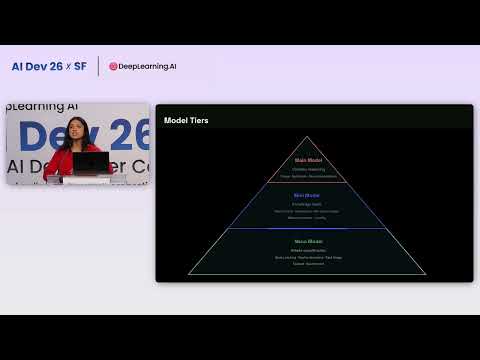
This content, presented by Aditi Gupta at AI Dev 26 x SF, focuses on building SRE agents using the Redis Context Engine. It explores the application of AI to optimize Site Reliability Engineering operations.
This document explores how AI amplifies software development, potentially leading to significant savings or damage, depending on human input. It presents a 2026 case study where a data engineer used AI to rewrite a JSONata engine from JavaScript to Go, saving Reco $300K/year in compute costs.
Azure VM performance is not solely determined by CPU size, but requires full-stack engineering. This involves choosing the right VM family, disk tier, IOPS, throughput, caching, accelerated networking, and availability design.
The role of a full-stack engineer is evolving in AI-first product teams, going beyond just frontend, backend, and deployment. Value now lies in understanding product goals, system design, reliability, and the ability to move across various disciplines like product, cloud, and AI workflows.
This content features Paul Everitt's presentation at AI Dev 26 x SF, focusing on the shift towards Agentic Engineering. The discussion explores how artificial intelligence is reshaping software development practices.
This content focuses on the process of building and deploying applications based on Large Language Models (LLMs) in production environments. It explores the challenges and best practices involved in creating robust and scalable solutions.
While AI website builders rapidly generate pages, they present engineering challenges such as limited fine-grained adjustments and unpredictable outputs. In contrast to WordPress page builders, AI's optimization for rapid generation sacrifices system predictability and flexibility.
The article discusses the growing trend of frontend engineers transitioning into AI training roles. This shift represents an evolution in developer responsibilities, adapting to new market demands driven by artificial intelligence.
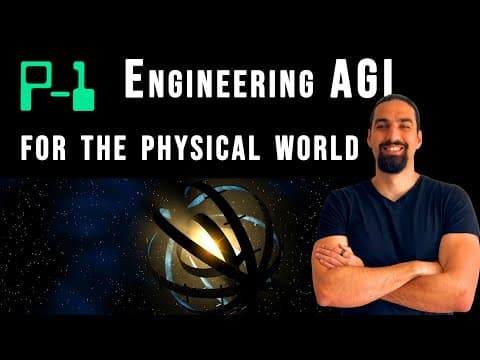
P-1 AI has secured a $23 million seed round to develop Archie, an engineering AGI. This AI is specifically designed for applications related to Dyson Spheres.
Data trust has evolved into a crucial SaaS revenue metric, shifting privacy compliance from a cost center to a growth driver. Engineering decisions now directly impact revenue as both enterprise procurement teams and individual users factor data handling into their purchasing and renewal choices.
The statement emphasizes that foundational architectural design should be established before the experimental phase in a project. Further details will emerge as the build matures.
The phrase "Topology rewrite not bug repair" is a concise statement differentiating between fundamentally restructuring a system and merely fixing existing faults. It implies that these are distinct processes, and one does not inherently solve the other.