Charades-Ego: A Large-Scale Dataset of Paired Third and First Person Videos
Charades-Ego is a large-scale dataset featuring paired third and first-person videos. This resource is valuable for research in computer vision and video analysis.
A persistent bug that has affected AI video technology for years has finally been solved. This fix represents a significant advancement for the quality and stability of artificial intelligence-based video systems.

Qwen-Image-Edit é uma nova versão do modelo Qwen-Image focada em edição de imagens, estendendo suas capacidades de renderização de texto para edição precisa. Ele permite edição semântica e de aparência ao integrar-se com Qwen2.5-VL e VAE Encoder.
D4RT é uma tecnologia que ensina a IA a perceber o mundo em quatro dimensões. Ela oferece reconstrução e rastreamento 4D unificados e eficientes, sendo até 300 vezes mais rápida que métodos anteriores.
This article delves into the technical intricacies of SAM 3, exploring the architecture and functioning of its underlying data engine. It provides an in-depth look at how Meta's AI system processes and utilizes data for advanced capabilities.

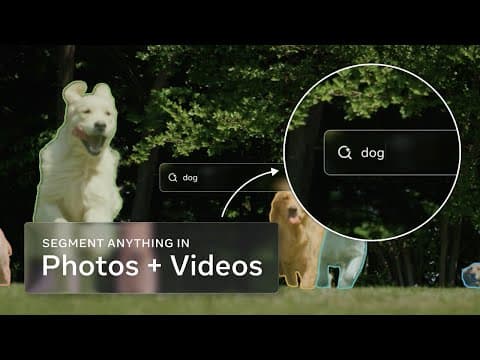
Meta introduces the Segment Anything Model 3 (SAM 3), an evolution that unifies detection, segmentation, and tracking. This new version promises significant advancements in the field of computer vision.

SAM 3D has been introduced as a new standard for 3D object and human reconstruction from a single image. This technology represents a significant advancement in the field of computer vision and 3D modeling.

This content provides a practical tutorial on Neural Style Transfer, detailing how to implement this technique. It explores the use of the Weights & Biases library for monitoring and managing machine learning experiments. The guide is ideal for those looking to learn how to apply artistic stylization to images.
SAM 3 focuses on building a unified model architecture for detection and tracking tasks. It aims to improve efficiency and accuracy in computer vision applications.

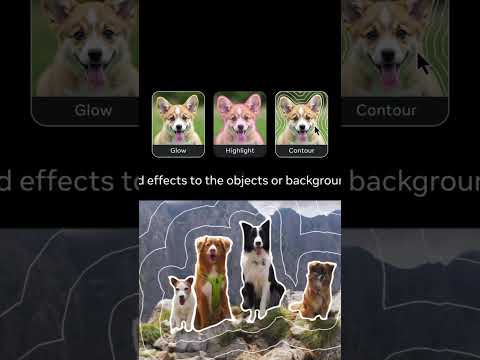
Meta has unveiled the Segment Anything Playground, a new platform designed for exploring and utilizing the Segment Anything Model (SAM). This initiative from AI at Meta aims to make advanced image segmentation technology more accessible for developers and researchers.

This article delves into the two-model design powering SAM 3D, an AI initiative from Meta. It explains the architectural choices and engineering rationale behind this AI system.

Um assistente de pesquisa busca uma equipe para realizar trabalhos mais sérios em IA/ML, focando em visão computacional. O objetivo é aprofundar conhecimentos e publicar artigos. Ele convida equipes que procuram um colega a entrar em contato.
The content addresses the challenge of creating consistent product photography for e-commerce, highlighting the expense and slowness of traditional methods. It proposes using an AI image generation API to seamlessly replace backgrounds by masking subjects, significantly accelerating the workflow.
Multimodal AI, integrating multiple data sources like vision and language, is gaining traction due to increasing digitization and diverse applications across sectors. Despite its promise, a key challenge remains the effective fusion of disparate data types with different processing requirements.
Este artigo explora o reconhecimento facial de indivíduos mascarados como uma solução avançada para sistemas de autenticação seguros. Ele aborda os desafios e as inovações tecnológicas no uso da inteligência artificial para melhorar a segurança e a precisão em cenários de uso de máscaras.
This content analyzes Computer Vision trends for 2026, moving beyond traditional object detection. It outlines industry growth, key statistics like market size and enterprise adoption, and the technology stack including tools, frameworks, and cloud platforms.
This content analyzes the common limitations of image processing metrics, using visual examples to illustrate how traditional evaluation methods may not always align with human perception or accurately reflect algorithm performance. It highlights the challenges in objectively assessing image quality and processing effectiveness.
Este conteúdo aborda como a inteligência artificial pode resolver disputas de documentação para pescadores comerciais, utilizando fotos de alta qualidade como prova central. Aplicativos de logbook com IA e visão computacional podem identificar espécies, estimar tamanhos e automatizar registros de captura, aumentando a eficiência e a conformidade.
This article details the author's personal journey in classifying clothing images using a Sequential Neural Network and the Fashion MNIST dataset, facing the challenge of differentiating sneakers from bags. After the model struggled with real-world photos, the author outlined strategies to overcome difficulties, including refining preprocessing and normalizing input, while also recognizing the need for CNNs for real-world data.
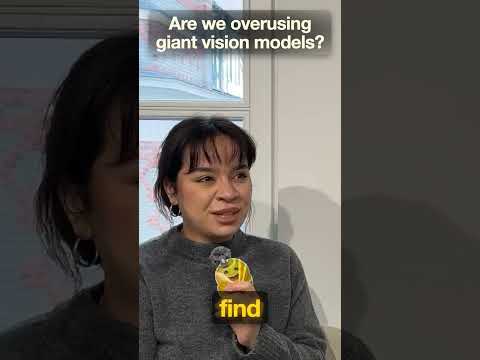
This article questions the current practice of deploying excessively large AI vision models. It explores whether the complexity and resources required for such models are always justified.