DOCfreeCodeCamp (YouTube)·25d ago
Think in JavaScript – The Hard & Conceptual Parts (Full Course)
This full course covers the hard and conceptual parts of JavaScript. It aims to deepen understanding of the programming language's fundamentals.
3
This full course covers the hard and conceptual parts of JavaScript. It aims to deepen understanding of the programming language's fundamentals.
The article explores non-cooperative cancellation in worker modules, contrasting it with cooperative methods. It demonstrates how a tightly-looped JavaScript worker, without explicit signal checks, cannot be stopped externally by an AbortController.
Optimizing React Native performance after migrating to its New Architecture requires understanding how Fabric Renderer, TurboModules, JSI, and Hermes alter app behavior. Unexpected speed improvements often lead to slow or memory-intensive apps if these new interaction layers are not correctly tuned.
docreplacer.online is a free, in-browser tool that converts plain-English prompts into .docx files without a backend, uploads, or remote storage. The creator opted for this serverless approach after observing that browsers can already generate .docx files from structured text.
This article introduces synchronous and asynchronous JavaScript behavior, explaining why the language, which is single-threaded by default, requires asynchronous capabilities. It covers basic concepts in relation to Node.js architecture.
This content debunks the myth that Java and JavaScript pass objects by reference, clarifying that both languages are strictly call by value. It explains that while object mutations within a function affect the original due to shared memory addresses, reassigning the parameter variable only changes its local copy.
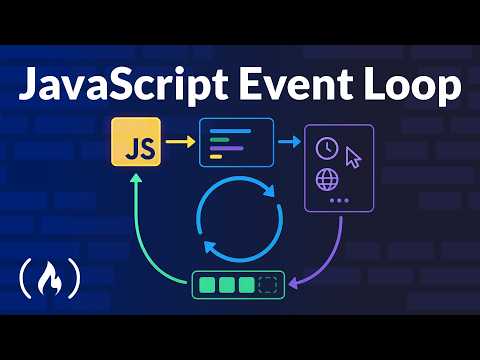
This content explains the JavaScript Event Loop and how it enables asynchronous programming. It covers the fundamental concepts of how JavaScript handles non-blocking operations.