ARTICLEOpenAI Blog·4/10/2026
ChatGPT for research
This content teaches how to leverage ChatGPT for research purposes. It covers gathering sources, analyzing information, and generating structured, citation-backed insights.
27
This content teaches how to leverage ChatGPT for research purposes. It covers gathering sources, analyzing information, and generating structured, citation-backed insights.
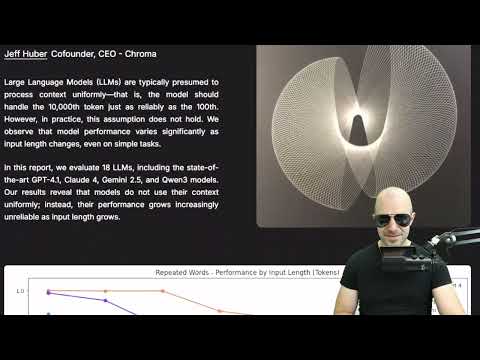
This analysis examines "Context Rot," a phenomenon where the performance of Large Language Models degrades as the length of their input context increases. It delves into how longer input tokens negatively impact LLM accuracy and reliability.
Um assistente de pesquisa busca uma equipe para realizar trabalhos mais sérios em IA/ML, focando em visão computacional. O objetivo é aprofundar conhecimentos e publicar artigos. Ele convida equipes que procuram um colega a entrar em contato.
The author initially used "setup" for their AI agent configurations, later discovering "harness" from an arXiv paper. This term is a more accurate description for integrating various AI agent components and is treated as a first-class research object.
By 2026, many free AI research tools are expected to outperform premium options, offering deeper research, better source verification, and more practical workflows. This is crucial for businesses and professionals seeking reliable research systems to save time and improve decision-making.
The content highlights the inadequacy of English-first search for comprehensive Chinese AI research, proposing AutoSearch to give AI agents native access to over 10 Chinese sources. This system allows agents to route questions to specific platforms, overcoming coverage limitations and ensuring access to local vocabulary often missed in translated summaries.
This week in AI saw developments across practical applications like ChatGPT, critical security concerns regarding LLM vulnerabilities with new startups emerging, and academic research focusing on transformer model optimization. An 'Artificial Intelligence Essentials' book was also launched, adding to AI education resources.
Kiro, an AI-powered development environment, responds to an SEO content research request, detailing its capabilities and limitations. It can assist with researching content topics, analyzing competition, and structuring findings in technical formats like JSON.
The article describes how AI has become so pervasive at MIT that one can almost stumble into it without intending to. Associate Professor Sili Deng is cited as an example of how the COVID pandemic led her to go all-in on artificial intelligence.
Zhihu is analyzed as a valuable source for AI agents in deep Chinese research, offering detailed explanations and context. Agent workflows should account for its variable quality, leveraging its strengths for long-form reasoning.
This content teaches users how to effectively conduct research with ChatGPT, utilizing search and deep research techniques. It covers finding up-to-date information, analyzing sources, and generating structured insights.
O Google DeepMind está pesquisando os riscos de manipulação prejudicial da IA em setores como finanças e saúde. Esse trabalho visa desenvolver novas medidas de segurança para proteger as pessoas.
The content describes the capabilities of Kiro, an AI assistant, in response to a request for SEO topics. Kiro offers to help with content research, competition analysis, and structuring findings, requesting more context on Topify.ai and "GEO content".
Researchers have discovered a new, more environmentally friendly and cheaper method to extract lithium, a critical metal for electric vehicle batteries and energy storage. The findings were published in Science, and a startup named Rock Zero is working to commercialize the process.
O Google revisita o ano de 2025, destacando oito áreas com avanços significativos em pesquisa. Este conteúdo resume as descobertas de pesquisa do ano.
Harvard researchers identified $143 million in anomalous profits on Polymarket, suggesting the concealment of insider trading in prediction markets. Analysis revealed that flagged traders had a nearly 70% win rate, including a case of half a million dollars profited before sensitive news.
Holos é um sistema multiagente baseado em LLM projetado para operar em escala web, visando a 'Web Agêntica'.
Este conteúdo explora a natureza dual do jogo digital, reconhecendo-o como entretenimento e uma ferramenta cognitiva. Ele destaca ganhos cognitivos mensuráveis e o surgimento de usos terapêuticos, ressaltando a importância do contexto e design.