RAG 시스템 실전 구축 (v38)
This practical guide explains Retrieval-Augmented Generation (RAG) systems, detailing their three core phases: retrieval, augmentation, and generation. It includes a simplified Python implementation example for ML engineers.
This guide explains how to set custom model storage paths in ComfyUI, allowing models to be recognized from additional directories besides the default. It details the steps for configuring `extra_model_paths.yaml` and restarting ComfyUI for the changes to take effect.
This content serves as an introductory guide for getting started with managed agents. It covers the initial steps and fundamental concepts for their implementation.

This tutorial outlines how to build a profitable AI agent using the LangChain framework, focusing on automating tasks and generating value. It includes practical steps and code examples for setting up LangChain with LLMs.
This post details implementing object detection with Amazon Nova 2 Lite. Readers will learn how to deploy an object detection application using Amazon Bedrock, AWS Lambda, and Amazon API Gateway, as well as how to craft effective prompts and visualize results.
This article details the process of building an MCP server using Spring Boot and Spring AI. The author shares lessons learned on wiring tool definitions, handling stdio transport, and avoiding common development pitfalls.
Este artigo detalha a construção de um pipeline RAG (Retrieval-Augmented Generation) do zero em Rails. Ele aborda a ingestão de documentos, fragmentação, geração de embeddings, busca vetorial com pgvector e a utilização do OpenAI para gerar respostas baseadas em conteúdo específico.
This content outlines how to develop a full-stack application using Google AI Studio. It serves as a practical guide for creating integrated solutions with artificial intelligence.

This article, part of 'The Learn Arc' series, outlines a six-step template to design and ship your first Active Inference agent. It shifts from theory to practical application, guiding users to define the agent's hidden states, observations, and actions.
This article guides the reader through creating their first MCP tool: a `readFile` function that allows an AI to read files on a machine. It focuses on the practical application of previous theoretical knowledge to build a tangible AI capability.
This detailed guide teaches how to build a full-stack ZK-privacy application on the Midnight blockchain, connecting to Lace Wallet and interacting with a Counter smart contract. It addresses common pitfalls like version mismatches and provides the complete source code to assist developers.
This practical guide provides a quickstart to setting up and running your first AI agent in just five minutes. It focuses on a straightforward, no-nonsense process for developers or enthusiasts looking to get started quickly with AI agents.
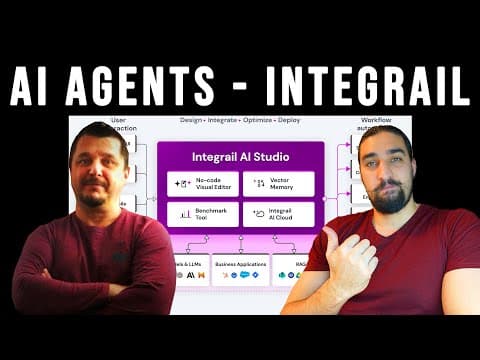
This content is a tutorial on how to build AI agents using the Integrail platform. It's presented as a Halloween special, guiding users through the creation process.

This tutorial explains how to use PyEnv to effectively manage Python environments, specifically for machine learning projects. It guides users through setting up and switching between different Python versions to ensure dependency isolation.
This content provides an introduction to Natural Language Processing (NLP) and experiment tracking, using Arvix data for tag generation. It serves as a guide for learning about these techniques in the context of artificial intelligence.
This content teaches how to use ChatGPT, start your first conversation, and discover simple ways to write, brainstorm, and solve problems with AI. It's an introductory guide to leverage the capabilities of artificial intelligence.
This content details how an individual automates businesses using the n8n tool and successfully charges $2,000 per month for these services. It provides insights and methods for aspiring automation consultants to replicate this business model.
This post is a submission for the DEV Education Track: Build Apps with Google AI Studio. It outlines what was built, includes a demo, and details the author's experience.
This step-by-step tutorial guides you on building a money-making AI agent using the LangChain framework in Python. It explains how to create an agent that interacts with the web, makes decisions, and generates revenue, starting with installation and environment setup.
This is a step-by-step guide for building your first human-guided AI chatbot using the AYW platform. It covers setup to deployment in 15 minutes, detailing technical requirements and its monorepo architecture.